Software is being picked apart

In 1790, Joseph Bramah put a padlock in the window of his Piccadilly shop with an offer of 200 guineas to anyone who could pick it. Nobody managed it for sixty-one years, then in 1851 Alfred Hobbs, an American locksmith, spent just over sixteen days on it and eventually collected the money.
It’s tempting to tell this autumn’s story about AI and software the same way: a lock that was safe for decades finally meets someone good enough to open it. Except in this case, that someone is any Tom, Dick or Harry with an AI agent and the open-source Reverse Engineer Anything repository on GitHub.
If you haven’t been following this, here’s what’s going on. When you buy software, you get the compiled program, the finished version a computer runs, not the source code its developers wrote. Working backwards from one to the other has always been possible, but extremely slow, specialist work, so mostly nobody bothered.
AI coding agents can now do most of that work themselves, and tools like REA plug them straight into the reverse-engineering software the professionals use. Its pitch is: see a feature you like in someone else’s app, and your agent will work out how it’s built and make you a version.
The results have piled up in a few weeks. A reverse engineer had a fleet of agents rebuild Call of Duty: Modern Warfare 2 from nothing but its executable. Modders put Skate 3’s skateboarding into Modern Warfare 2 and Minecraft into Elden Ring, and the clips did millions of views. A developer annoyed by Adobe’s cancellation fees released free, open-source clones of Photoshop, Premiere and five more Adobe apps.
Most of this is games and hobby projects, and plenty of it is rough. But it should worry anyone who sells software: if part of what protects your product is that nobody can see how it works, that protection is going.
Borrowed Intelligence
The Modern Warfare 2 rebuild did come from a specialist though. Maurice Heumann, a reverse engineer, ran his agents against the 2009 PC release for three months. By the end they had used an estimated 600–700 billion tokens, rebuilt 99% of the game’s functions as readable C++, and matched 83% of them to the original byte for byte. Activision had his footage taken down within days.
Modern Warfare 2, rebuilt from the executable by AI agents

99%
of the game’s functions rebuilt as C++
83%
identical to the original, byte for byte
600–700bn
tokens, by his own estimate
3 months
from first agent to fully playable
 Byte-exact
 Rebuilt, not byte-exact
 Missing
Each square is one per cent of the game’s functions.
Source: Maurice Heumann, “500+ Billion Tokens Later”, 9 October 2026
Piotr Migdał had no reverse-engineering experience when he connected Claude Code to Ghidra and brought Chromatron, a twenty-year-old puzzle game, back to life from its old binaries. Ken Ng, with little decompiler experience, used Claude to repair a Final Fantasy VII Rebirth mod after a game update broke it. A project called universal-modder now packages the whole approach as a set of agent skills: point Claude Code at a game you own and let it work out the rest.
 First successful decompile
 Chromatron, running again
Piotr Migdał’s revival of Chromatron.
Source: Piotr Migdał, Quesma
The mashups are sillier, and they’re what most people have actually seen. In mid-September a developer called vladtrc published IW4L, an AI-assisted, from-scratch Rust rewrite of the Modern Warfare 2 engine. A fortnight later a modder called chasm had used it to drop Skate 3’s skateboarding, and then a working Minecraft world, into the 2009 shooter.
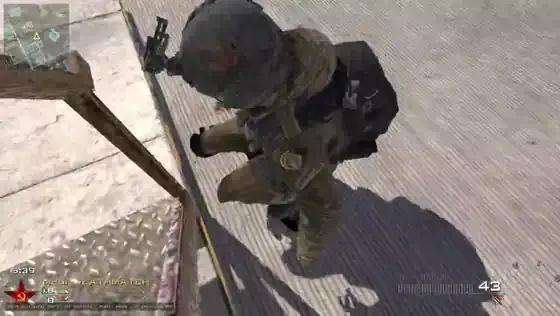 MW2 × Skate 3
chasm, on IW4L by vladtrc. Original clip on X
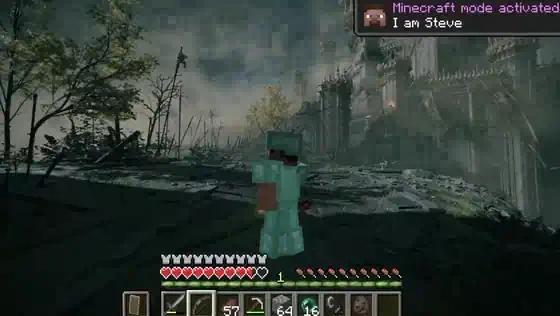 Elden Ring × Minecraft
Tobyn Jacobs. Original clip on X
This clip did millions of views, many of them from people convinced it was AI-generated video. After that the floodgates opened: Minecraft in Elden Ring, Spider-Man swinging through Batman’s Arkham.
But wait, there’s more
The Adobe clones don’t touch a binary at all. Brandon Thomas built them with Claude from Adobe’s published file specs and by watching how the real apps behave. His Photoshop clone round-trips 134 of 135 test PSD files byte-identical, and has picked up more than 45,000 GitHub stars in under a fortnight. Early users say most of the rest is rough. It exists anyway.
 PhotoCraft · for Photoshop
 FilmCraft · for Premiere
 VectorCraft · for Illustrator
There’s a reassuring narrative in software engineering that AI can write code, but it can’t work out what to build. That still takes intent, conversations with the people who’ll use the thing, and the patience to break a messy problem down until the right solution becomes obvious.
I think where the whole “everything’s reversible” piece comes into play though, is at the end of all that work. Every screen, API endpoint, feature, and so on, is a decision somebody made, and once it’s public, those decisions can be read back out.
Epoch AI’s MirrorCode benchmark had agents rebuild a 16,000-line bioinformatics toolkit without its source code, purely by running it and reading its documentation. To an AI, a well-documented API is a specification with a test harness attached. Judgement can be copied once it has been exercised and shipped. A clone doesn’t have to repeat your discovery work, because it inherits the answers.
The Answer Key
Whether something is easy to copy mostly comes down to whether a machine can check the copy. Heumann’s agents spent their first month producing code that was incorrect. What fixed it was a script that compiled each rebuilt function with the game’s original compiler and compared it, byte for byte, with the shipped executable. Once the agents had a pass/fail signal, even cheaper models did excellent work, because they only needed to be told when they were wrong.
People call this the answer key, and there usually is one, for example an API you can call and compare. If a machine can grade it, a machine can copy it.
It’s also getting better fast. Researchers at Columbia University spent more than 5,000 hours of expert time building a test of exactly this skill, using private software no AI could have seen before. When they published it, the best model could fully crack fewer than a third of the challenges. Within weeks, OpenAI said its latest model was cracking 88% on the first try.
Share of SRE-Bench binary challenges fully solved

31.5%
Best model in the original paper (GPT‑5.6 Sol)
88.0%
GPT‑6 Astra on its first attempt, 99.2% within four, as reported by OpenAI
Near-saturated within weeks of publication. The two results come from different set-ups (OpenAI’s used a large compute budget and no production safeguards), so read it as a direction of travel, not a like-for-like score.
Sources: SRE-Bench (Columbia DAP Lab); OpenAI GPT-6 Astra system card, via Popular AI, 6 October 2026
Assume it’s public
Security engineers have always worked on the assumption that the attacker already knows how the system works. Most software businesses never applied the same thinking to their commercial moat. A useful way to start is an old strategy exercise: imagine a well-funded new competitor, and ask what they’d need to do to genuinely scare you. If the honest answer is “copy what we’ve already built”, then consider:
What can people see? Your API reference, your docs and how your product behaves. Treat all of it as a spec someone else could build to.
Can a machine check a copy? File formats, protocols and testable business rules are now cheap to replicate. Things users judge slowly, over months of real use, are not.
Does it stand still? It’s no accident the first wave was old games: a 2009 executable is an answer key that never changes. Products in maintenance mode are in the same position. Something that ships every week is a moving target.
Do your customers want out? Adobe’s early termination fees cost it a $150 million settlement with the US government in March, and they’re the reason Thomas gives for his clones. Lock-in that customers resent gives them a motive, and AI has removed most of the cost of acting on it.
The law still applies (Activision and Bethesda have both issued takedowns this month), but it’s as slow as it’s always been, and it only deters people who care about it.
What a machine can check, and what it can’t

Cheap to copy now
- Logic that ships inside the app
- Anything with thorough public docs
- File formats and protocols
- Testable business rules
- Decisions already built into the product
Still expensive to copy
- Data that accumulates while you operate
- The next product decision, and the context to make it
- A product that ships every week
- Trust, distribution and network effects
My read, not a measurement.
Where the value goes
Have a wee think about what is still expensive to copy:
- Data that accumulates while you operate
- The next product decision, and the context to make it
- Trust, distribution and network effects
Coca-Cola keeps its secret formula in a vault at its own museum, and you can buy a ticket to stand next to it. Although I don’t think the formula itself is the business (as 50 Cent said: “I took quarter water, sold it in bottles for two bucks then Coca-Cola came and bought it for billions, what the fuck?”), the distribution network and the brand are what make it.
For a company like ours in software services, it means the deliverable isn’t really the software. It’s the context and the working relationship that produce the next version of it, and being the people who answer the phone when the current one breaks (which it never does of course). That’s a convenient conclusion for me, so weigh it accordingly.
But also, Bramah is still trading in London, 175 years after Hobbs. The lock was never the only thing it sold.
Sources
- Maurice Heumann, 500+ Billion Tokens Later: Letting AI Agents Decompile A First-Person Shooter, 9 October 2026.
- Julio Franco, Decompilation on Steroids: Why AI Is Suddenly Cracking Open Old Software, TechSpot, 11 October 2026.
- Rob Thubron, “Software is over”: Developer uses AI to build free Adobe clones, TechSpot, 8 October 2026.
- Popular AI, Frontier AI can now reverse-engineer software binaries, 6 October 2026 (SRE-Bench and GPT-6 Astra figures).
- Kotaku, I Don’t Want To Play Your AI-Generated Mod That Puts Skate 3 Inside Of Modern Warfare 2 Inside Of Minecraft, October 2026; chasmlol/2010-rust-rewrite-mashup.
- Popular AI also covers Epoch AI’s MirrorCode benchmark, Piotr Migdał’s Chromatron revival, Ken Ng’s FFVIIHook repair and universal-modder.
- Bramah lock and Coca-Cola formula, Wikipedia; morluto/rea.